

 UPDATE: STANFORD BLOOD CENTER IMPLEMENTS INDIVIDUAL DONOR ASSESSMENT FOR BLOOD DONATION
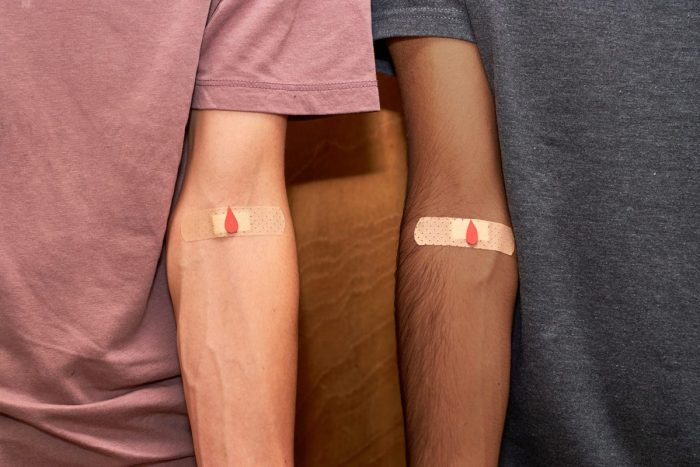
As of Thursday, October 19, Stanford Blood Center (SBC) has implemented the updated FDA blood donation guidelines, which eliminate questions based on sexual orientation. We look forward to welcoming those who may be newly eligible to support local patients through blood donation.
Stanford Blood Center is committed to achieving an inclusive blood donation process that treats all potential donors equally and ensures a safe, sufficient blood supply is readily available for patients in need. This historic change in approach to donor eligibility is significant progress, resulting in a blood donation process that is more inclusive and equitable than ever before. Stanford Blood Center enthusiastically supports this change, aligning the United States with countries like Canada and the United Kingdom.
Please use the information on this site as a general guide; an evaluation by a medical professional is the only way to determine blood donor eligibility. Before you donate for the first time, we recommend you read our Preparing to Donate page.
General Requirements
Donors must:
- Be at least 17 years of age (16-year-olds may donate blood with a parent/guardian’s consent). Donors under the age of 17 should bring the completed consent form (05-FX1) when registering to donate.
- Weigh at least 110 pounds for donors 19 or older (Donors under 19 — see height/weight requirements)
- Be free of cold and flu symptoms (allergies ok; as are most medications)
- Eat before donating and drink plenty of fluids
- Bring photo ID
- Fill out a Medical History Questionnaire and discuss answers confidentially with a Medical Historian. The questionnaire will be provided at the time of your donation, (which will be provided at the time of your donation, or you may fill out your medical history questionnaire ahead of time on the day of your donation by using SBC preCheck™.
YOUTH DONORS
The consent form can also be obtained:
- At a Stanford Blood Center donor center
- At a Stanford Blood Center community blood drive, or
- From your high school blood drive coordinator
Height & Weight Requirements
| Male Donors 18-Years-Old or Younger | ||||||
| If you are: | 4’7” or less | 4’8” | 4’9” | 4’10” | 4’11” | 5’ or taller |
| You must weigh at least: | 130 lbs. | 126 lbs. | 123 lbs. | 118 lbs. | 114 lbs. | 110 lbs. |
| Female Donors 18-Years-Old or Younger | ||||||
| If you are: | 5’1” or less | 5’2” | 5’3” | 5’4” | 5’5” | 5’6” or taller |
| You must weigh at least: | 133 lbs. | 129 lbs. | 124 lbs. | 120 lbs. | 115 lbs. | 110 lbs. |
| Nonbinary Donors 18-Years-Old or Younger | ||||||
| If you are: | 5’1” or less | 5’2” | 5’3” | 5’4” | 5’5” | 5’6” or taller |
| You must weigh at least: | 133 lbs. | 129 lbs. | 124 lbs. | 120 lbs. | 115 lbs. | 110 lbs. |
| Anyone 19-Years-Old or Older | |
| For all heights, you must weigh at least: | 110 lbs. |
Medical History
You will be asked to complete a Medical History Questionnaire each time you donate blood. Your honesty in answering these questions is a crucial part of the blood donation process. You may fill out your medical history questionnaire ahead of time on the day of your donation by using SBC preCheck™.
Once you have completed your form, a Medical Historian will go over your questions and answers with you. They may ask for further information, and you will have the opportunity to ask any questions you may have. The Medical Historian will then determine, based on your answers, if you are eligible to donate blood that day. Here are some reasons why a donor may be permanently deferred:
| HIV/AIDS | You are a person with symptoms or laboratory evidence of HIV virus. |
| Cancer | You have had Leukemia, Lymphoma, multiple myeloma and all other hematologic malignancies. |
| Heart Disease | You’ve ever experienced heart failure or coronary artery disease. Other heart conditions may require your doctor’s permission. |
| Hepatitis | You have a history of the disease. |
| Organ Failure | You have experienced kidney, lung, or liver failure. |
Deferral Information
We know it can be disappointing to find that you are not eligible to give blood. There are several reasons for — and even different types of — deferrals. Depending upon the reason, a deferral may be either temporary or permanent. From time to time, the FDA makes changes to deferrals, which may allow previously deferred donors to give blood again or for the first time.
On rare occasions, donors may be deferred for reasons not listed on our website or educational materials to protect the safety of the donors and/or patients. For example, an open wound may be cause for deferral, and donors should disclose if they have any wounds prior to donation for a safety assessment. Donors are always welcome to call SBC Resource Nurse at 650-725-7336 with any questions they have about eligibility prior to donation.
The U.S Food and Drug Administration (FDA), in an attempt to ensure a safe blood supply, has imposed strict controls on who may donate. If you discover that you are not eligible to give blood, you can still save lives by providing blood for research, coordinating a blood drive within your organization, volunteering your time, or contributing financially. However you participate in our programs, you are helping maintain the health of our community. Thank you for your dedication.
After viewing the Medical History Questionnaire and the common reasons for deferral below, if you have questions about your eligibility, contact us at (650) 723-7831.
Please read below for more information about some of the common reasons for deferral.